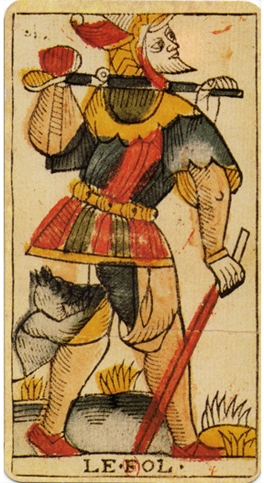
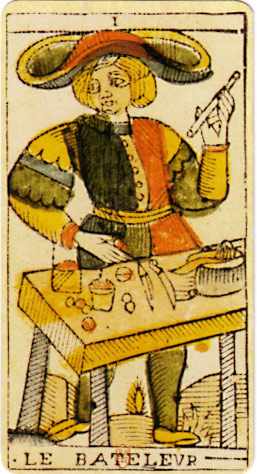
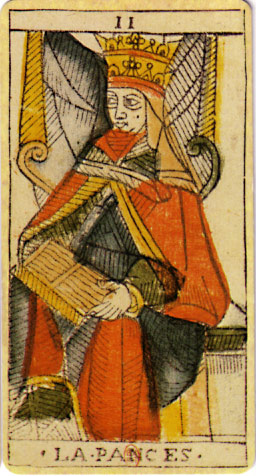
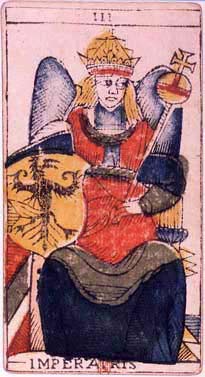
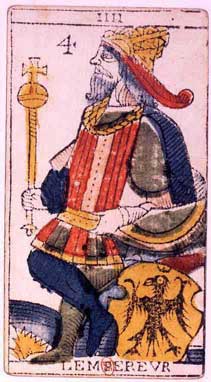
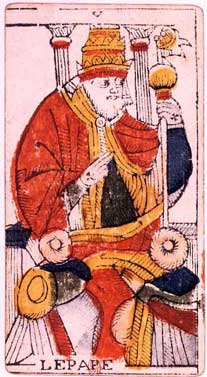
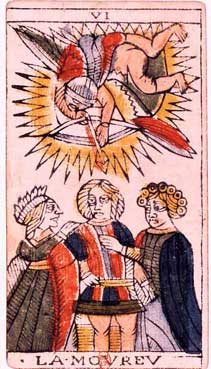
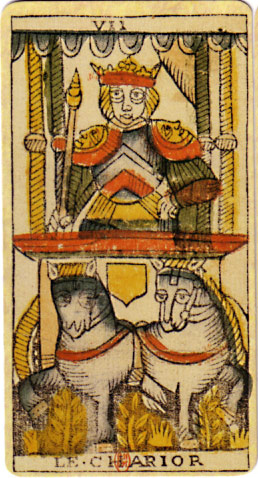
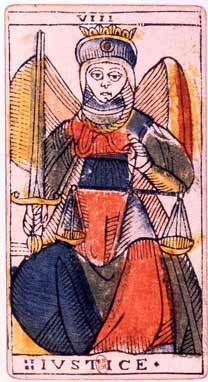
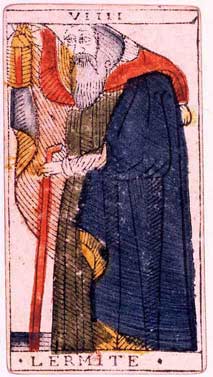
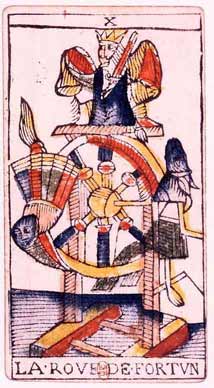
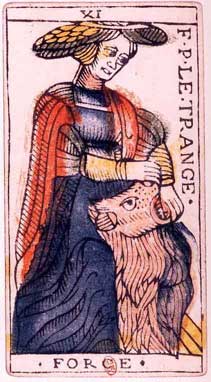
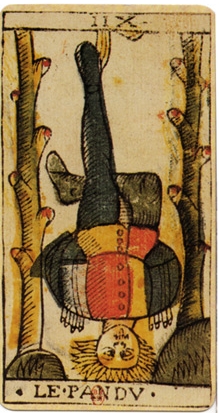
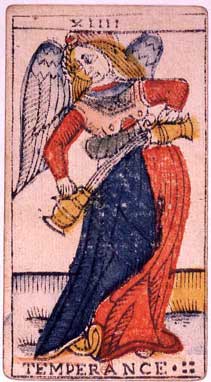
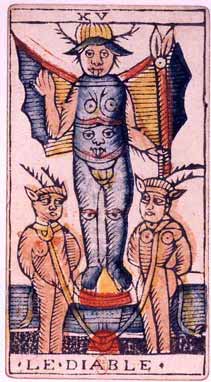
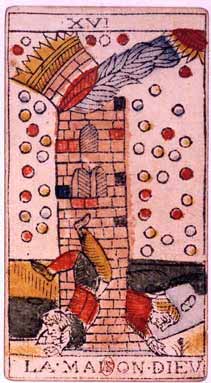
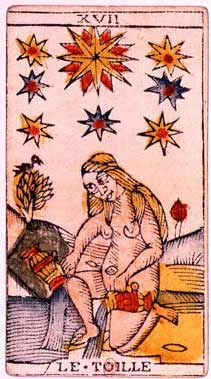
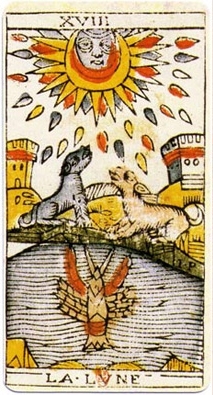
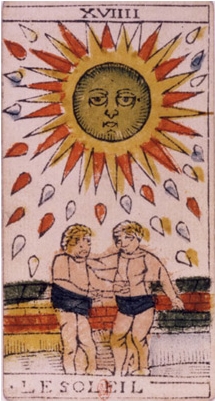
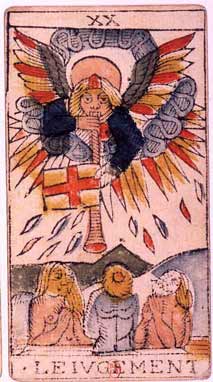
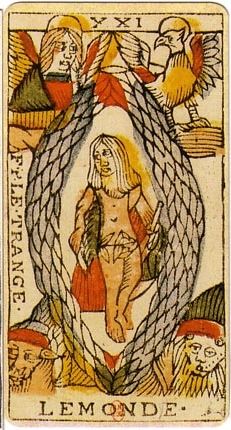
Named by the famous French occultist Papus in his book The Tarot of the Bohemians in the late 19th century, the Tarot de Marseille is a whole family of tarot decks closely related to a single design. The deck most probably originated in northern Italy in the second half of the 15th century. In 1499 Louis XII of France invaded Lombardy and seized Milan, and the first versions of the Tarot de Marseille were probably brought to southern France during the occupation that followed. Marseille was then a centre of playing-card production. From that time on, many variations of the original design appeared in Marseille and other French cities. In the 17th century the game and its decks were reintroduced from France into northern Italy, and the Tarot de Marseille pattern became dominant. Today it remains probably the most influential deck of all, the inspiration for countless modern decks. The early cards were printed from woodcuts and then coloured by hand. Two early versions of the Marseille tarot that are well known today are those of Jean Noblet (c. 1650) and Jean Dodal (c. 1701). The Belgian pattern (the Flemish deck) is also very close to the old versions of the Tarot de Marseille.
The deck was originally used to play the game of tarot (tarocchi). Only later was it used for divination, as first recorded in the 18th century in the writings of Giacomo Casanova.
From today's perspective the structure of the deck looks standard, which is not surprising, since this deck is the blueprint for most modern decks.
| Minor Arcana | |||
|---|---|---|---|
| Bâtons (Wands) | Épées (Swords) | Coupes (Cups) | Deniers (Pentacles) |
| Ace to 10 | Ace to 10 | Ace to 10 | Ace to 10 |
| Valet (Page) Chevalier (Knight) Dame (Queen) Roi (King) | Valet (Page) Chevalier (Knight) Dame (Queen) Roi (King) | Valet (Page) Chevalier (Knight) Dame (Queen) Roi (King) | Valet (Page) Chevalier (Knight) Dame (Queen) Roi (King) |
- The second card of the Major Arcana is called La Papesse. It may represent the legendary Pope Joan, a woman who supposedly disguised herself as a man and rose through the church hierarchy all the way to the papacy. Most modern scholars dismiss Pope Joan as a medieval legend. In some older decks La Papesse was replaced by variants such as Junon (Juno) or Le Spagnol Capitano Eracasse. More recent decks use The High Priestess, following Court de Gébelin.
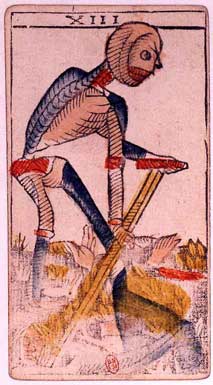
- Card XIII is left unnamed in many variants of the Tarot de Marseille. In the Noblet deck it is named La Mort (Death), while in some Italian decks it is called Il Tredici (The Thirteen).
- In some influential modern tarot decks, Justice and Strength exchange places in the Major Arcana.
- Some researchers claim to have found the golden ratio in the imagery of Nicolas Conver's Tarot de Marseille, which they take as a sign that its maker had a deeper knowledge of esoteric traditions.
- Some motifs once considered Egyptian may not be Egyptian at all. The winged sphinx, for example, is said to have been known in old European tradition and venerated by cults near Marseille.