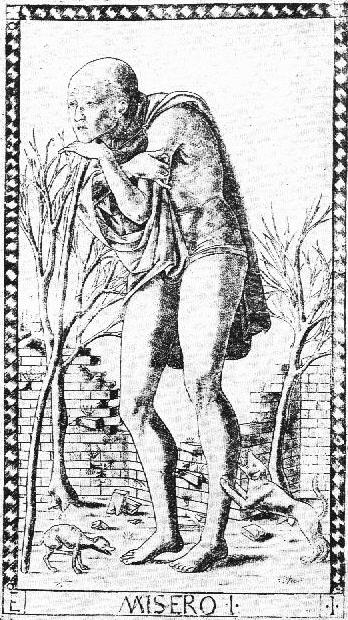
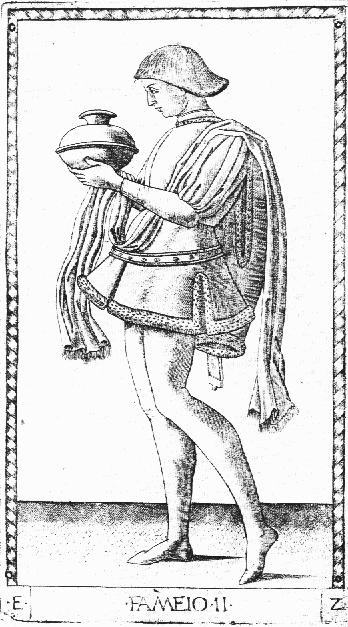
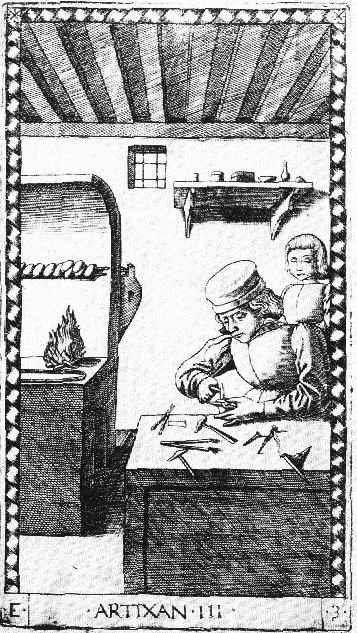
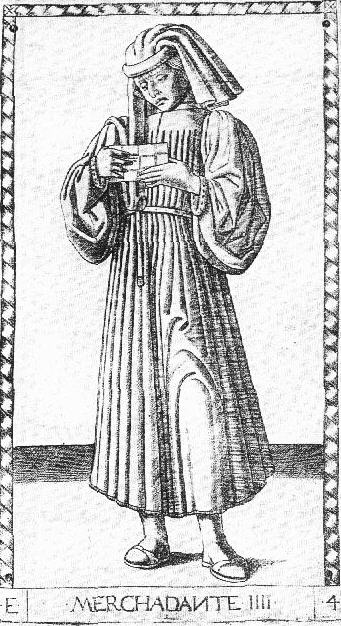
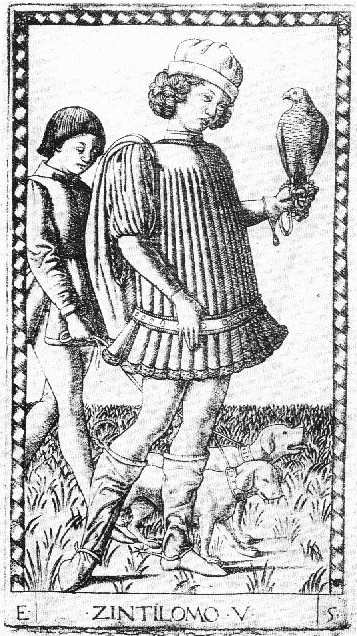
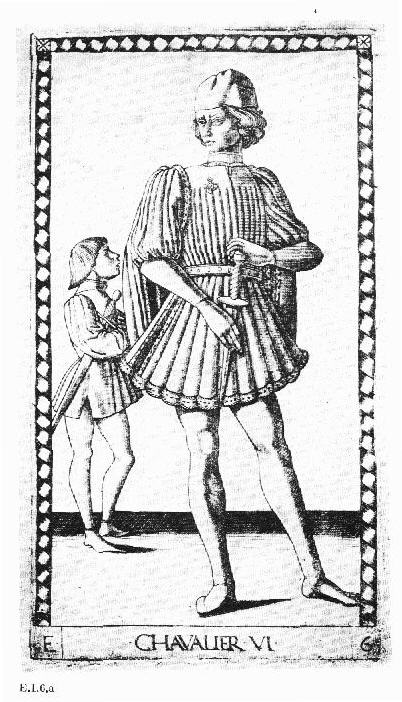
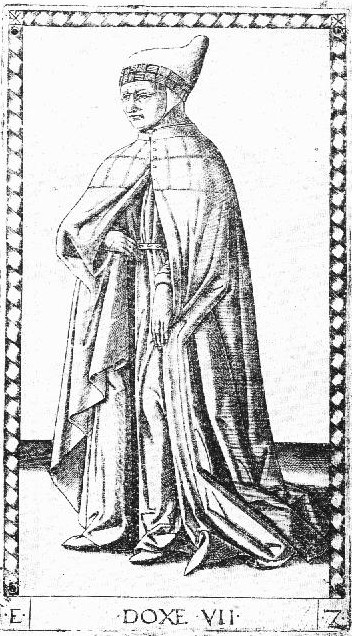
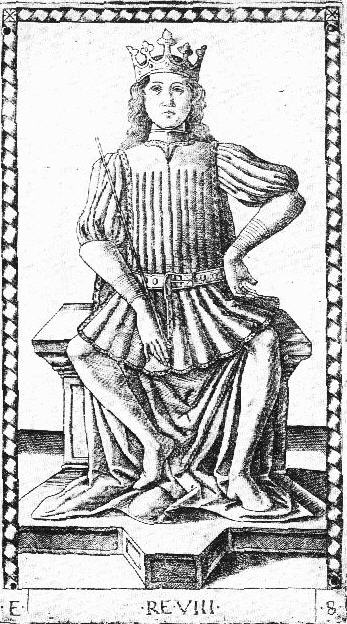
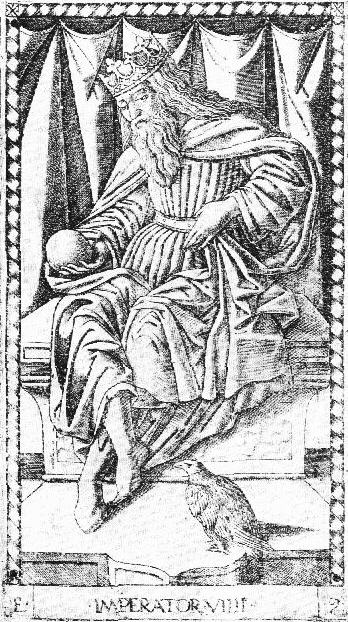
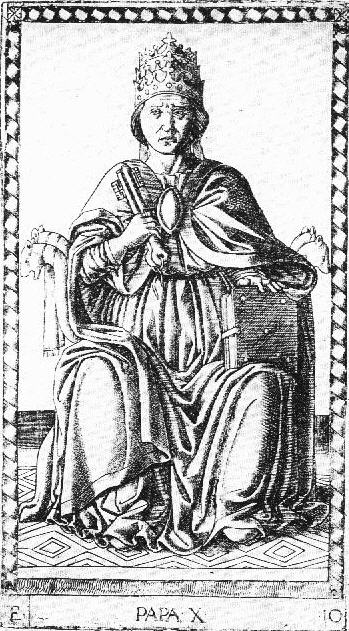
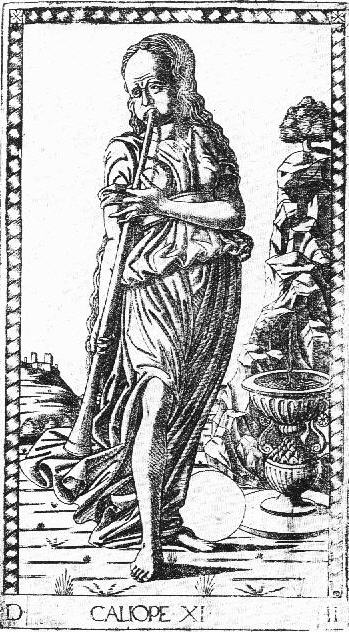
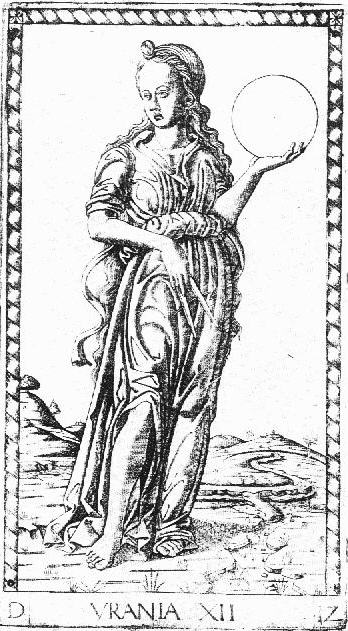
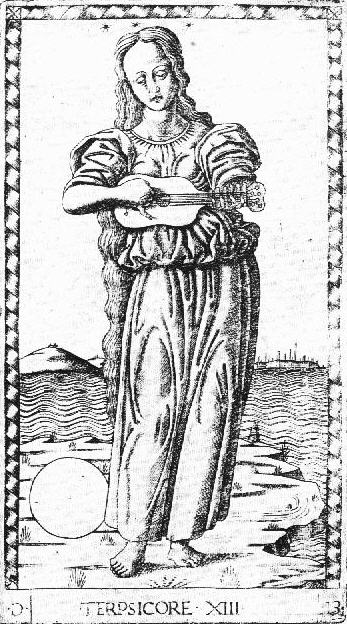
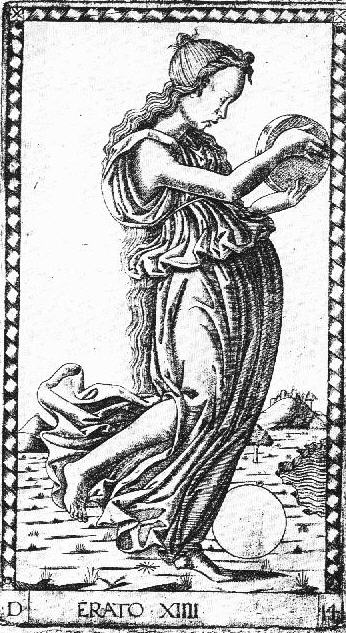
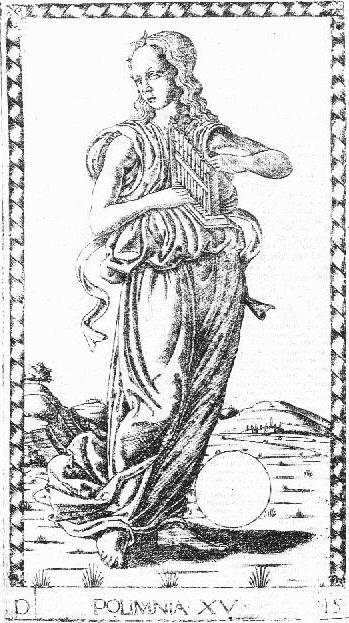
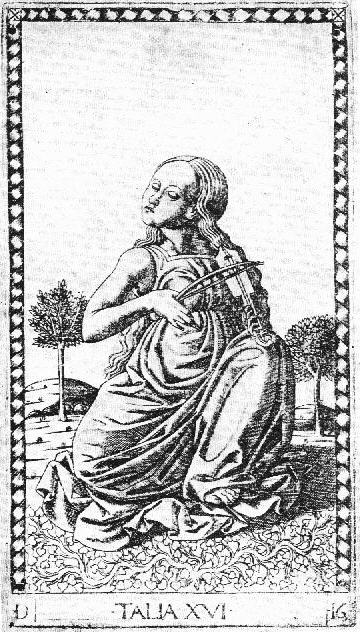
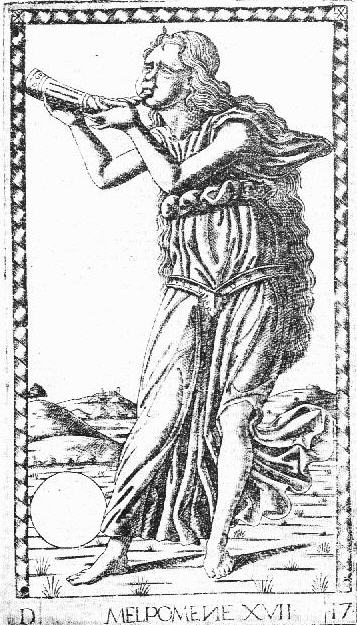
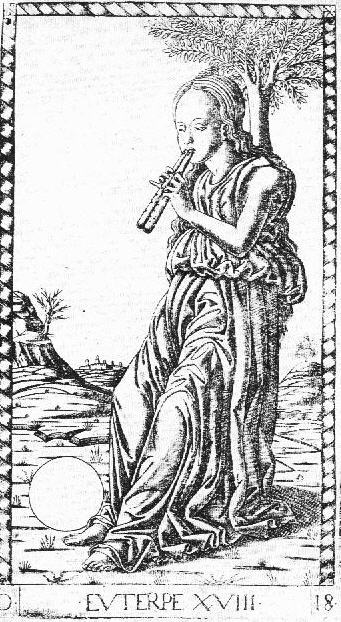
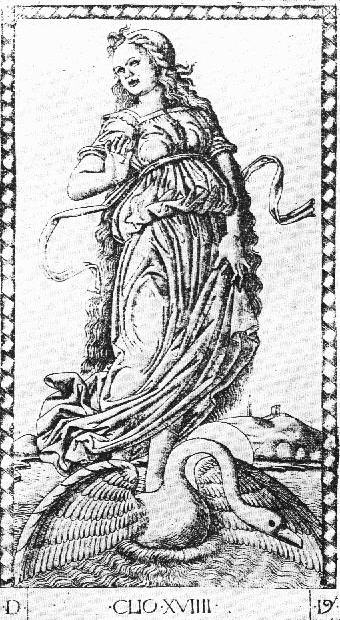
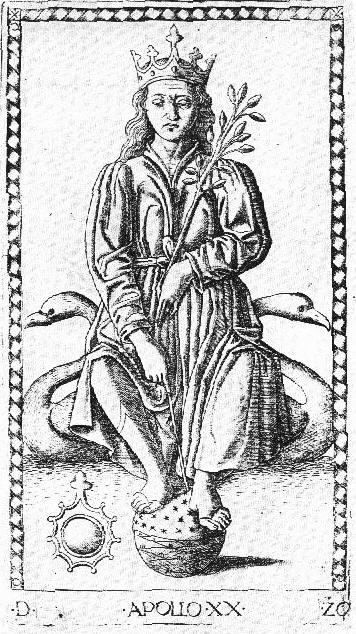
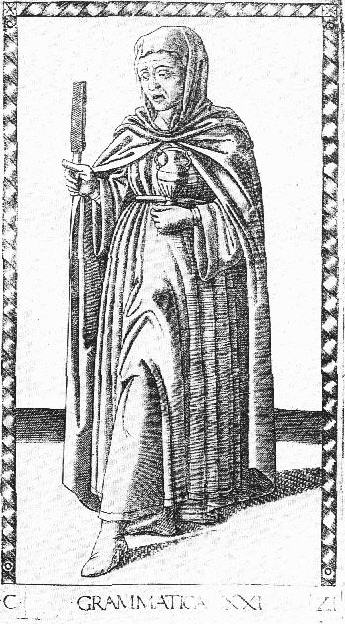
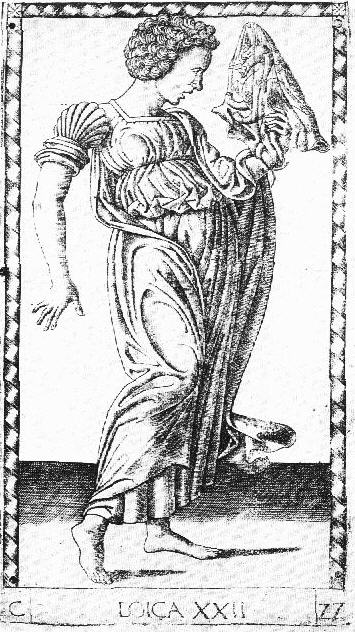
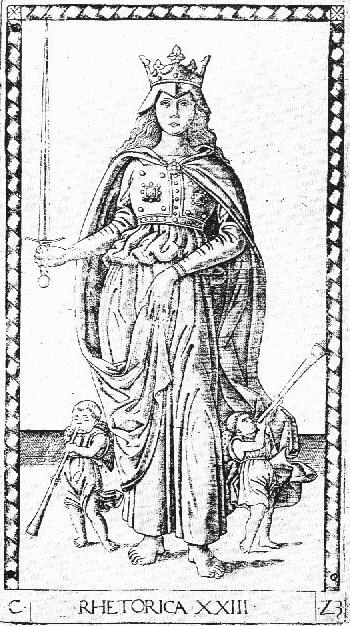
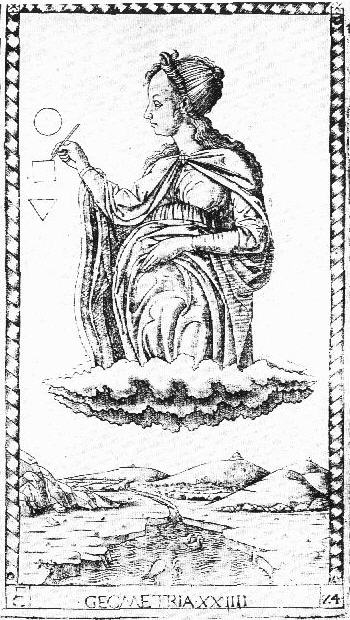
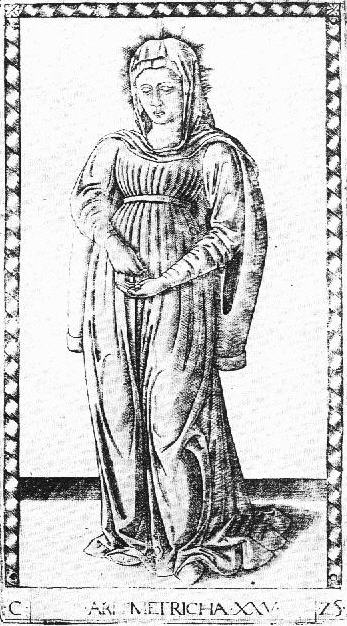
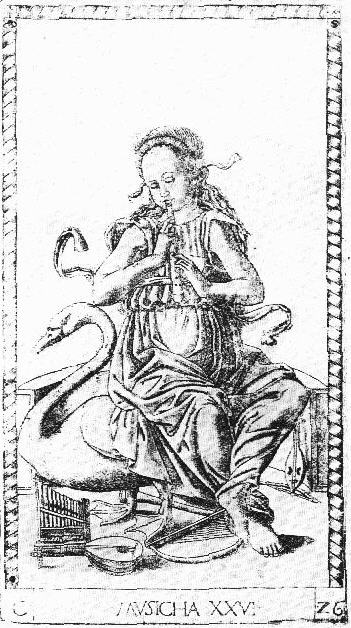
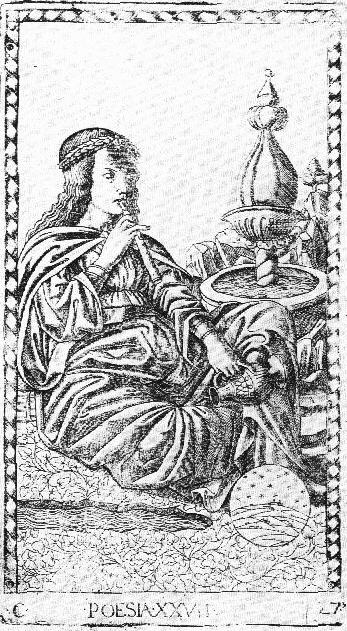
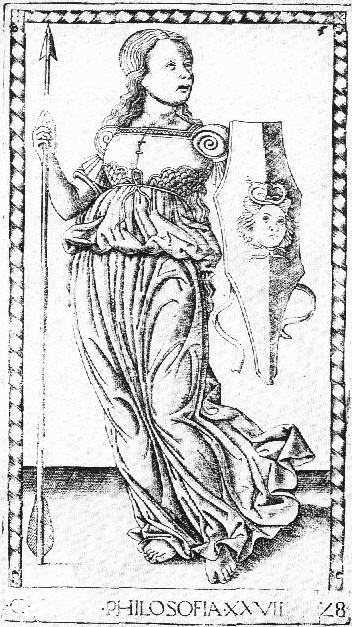
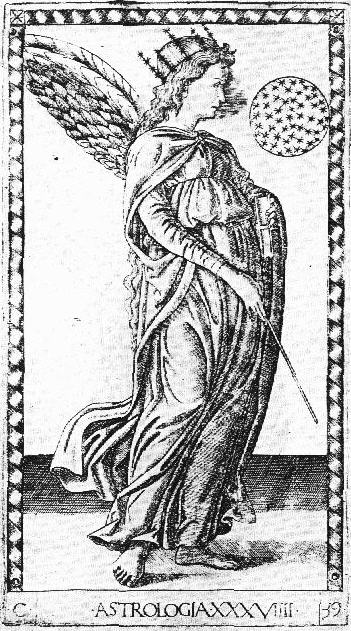
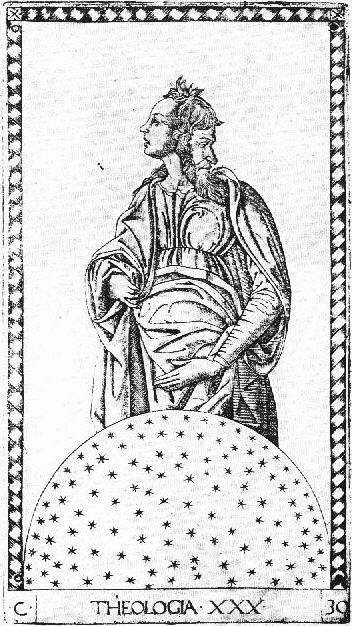
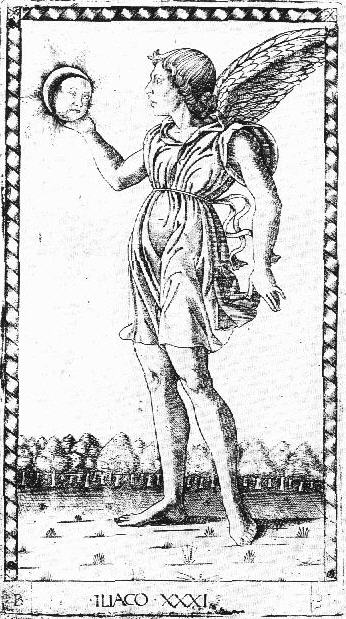
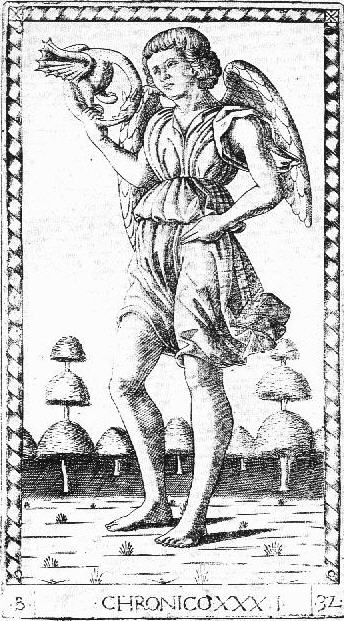
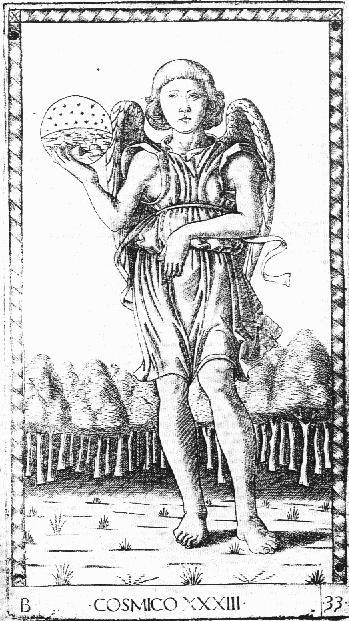
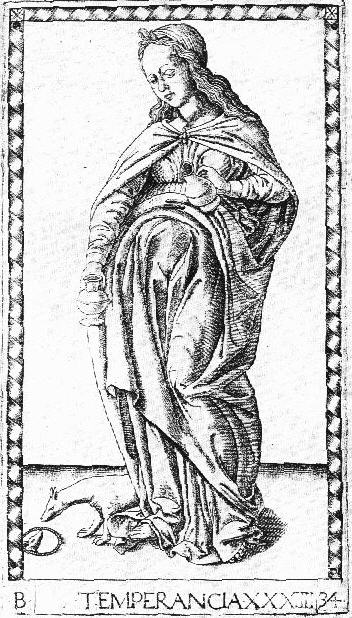
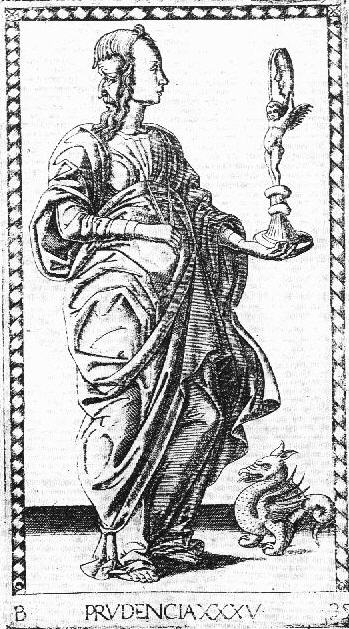
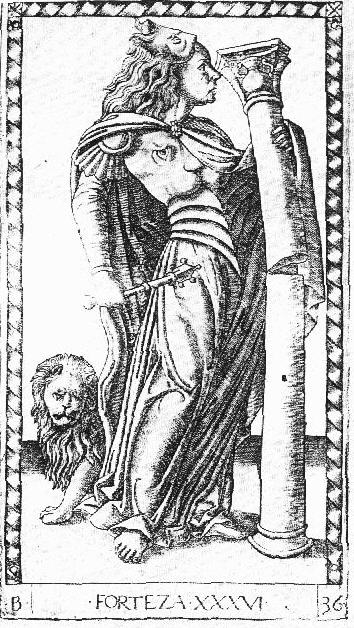
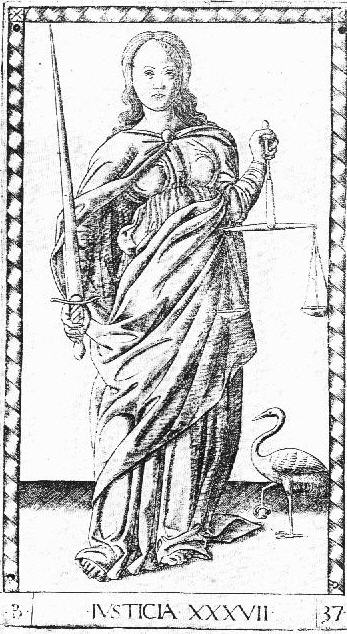
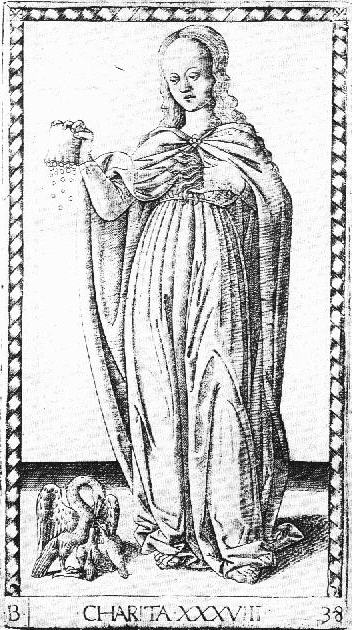
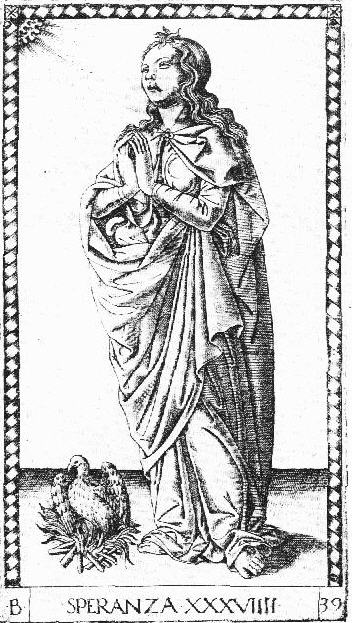
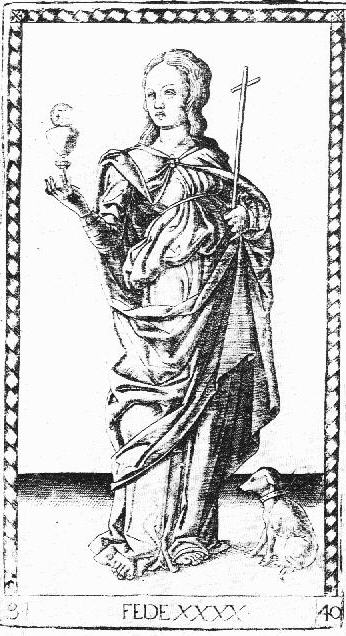
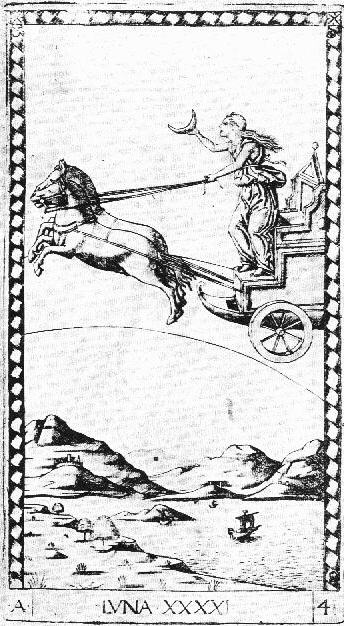
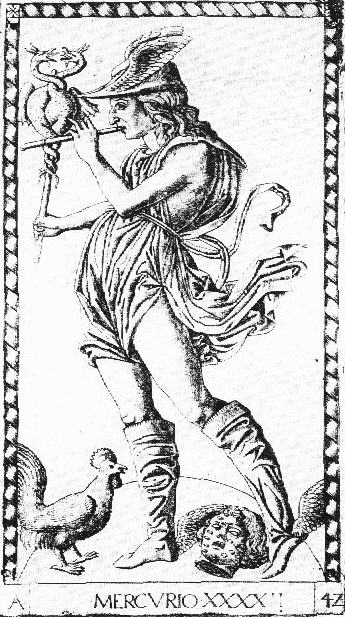
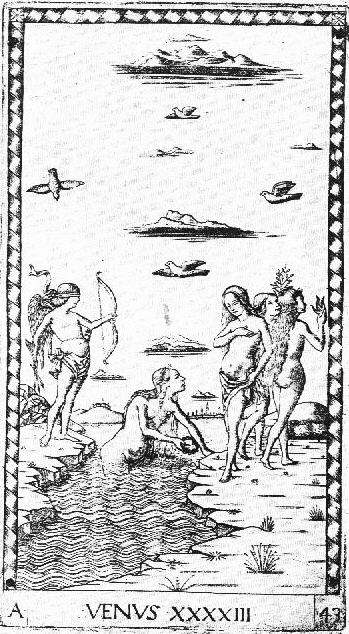
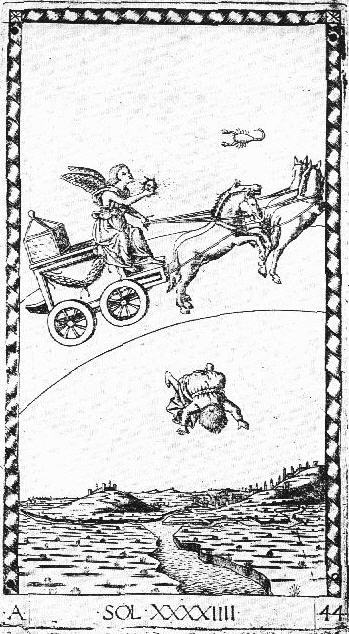
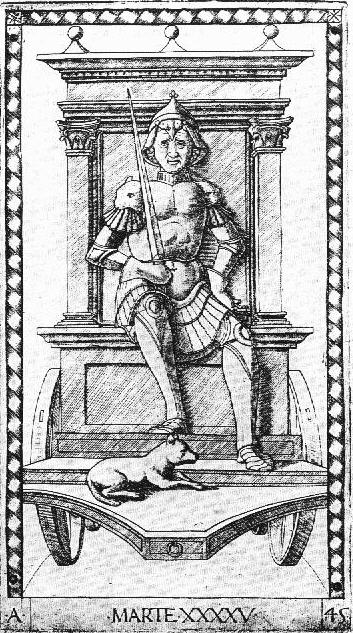
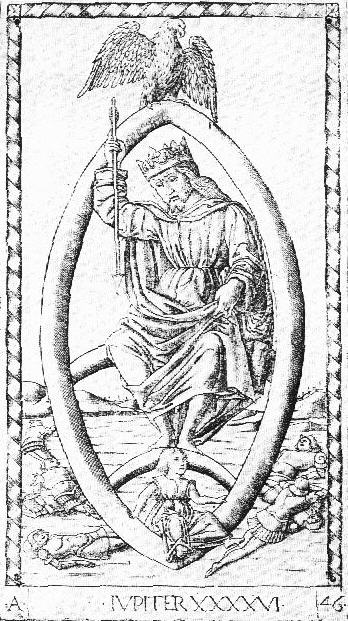
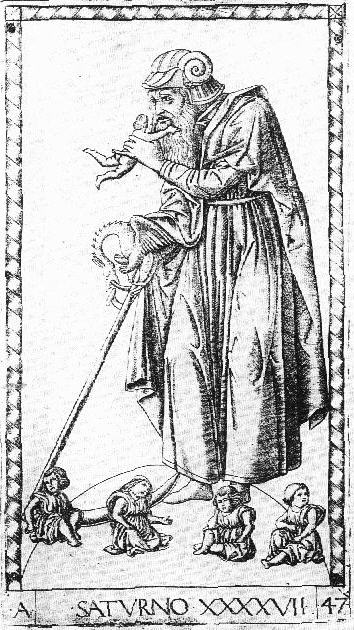
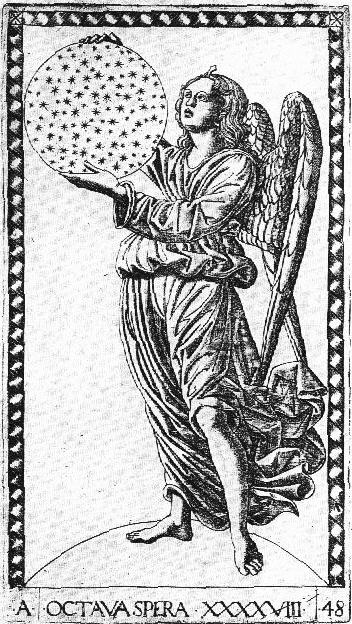
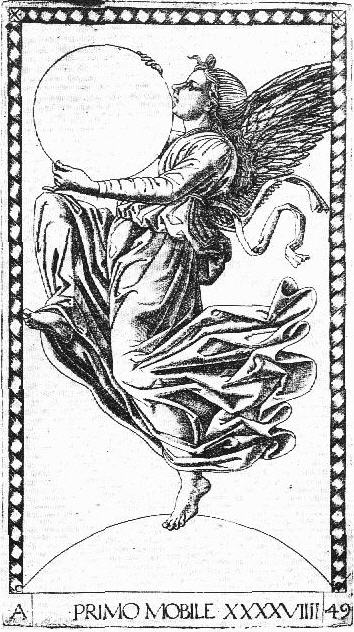
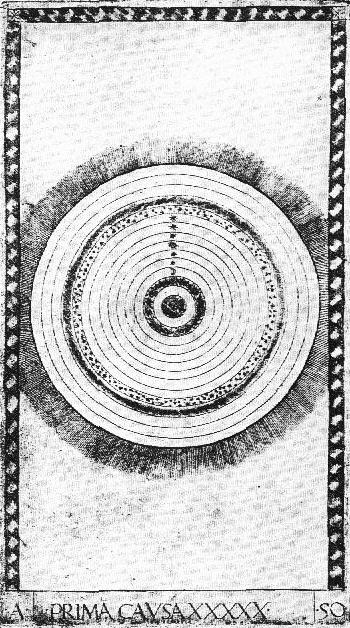
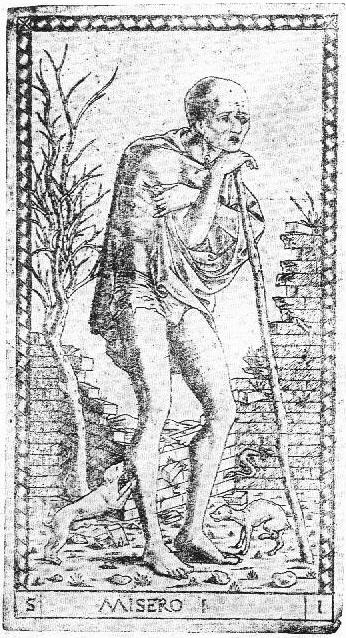
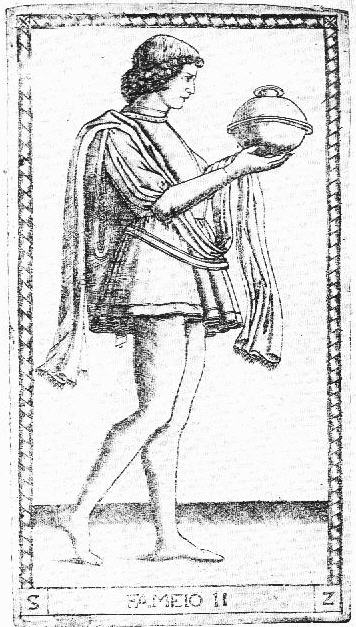
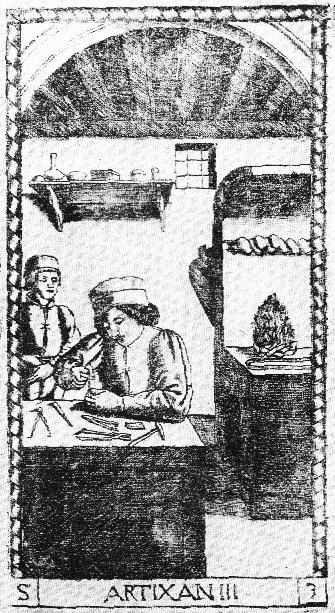
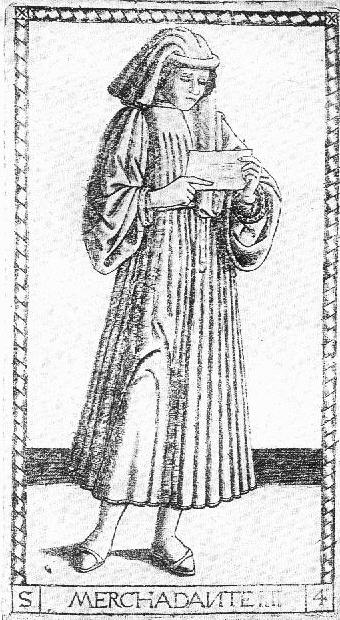
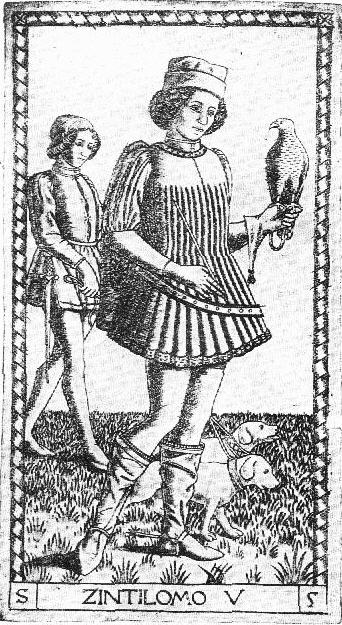
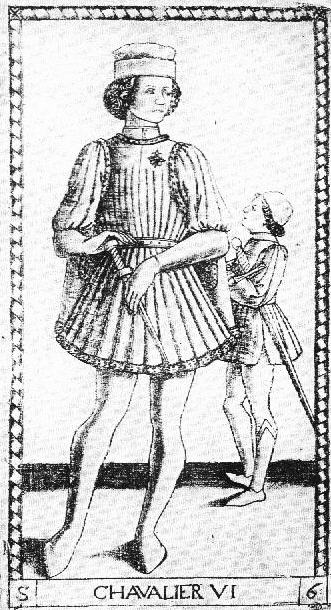
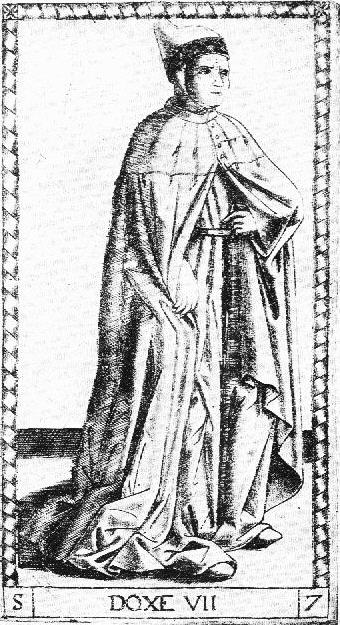
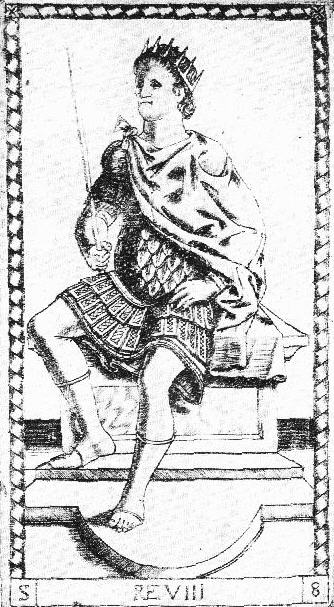
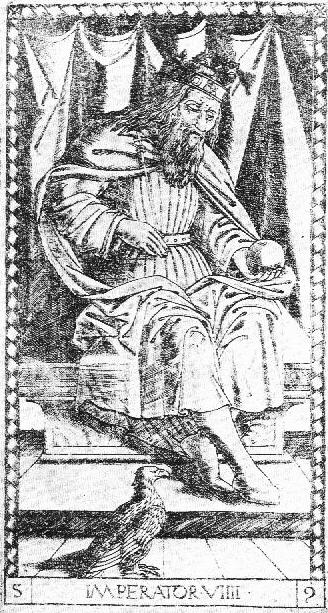
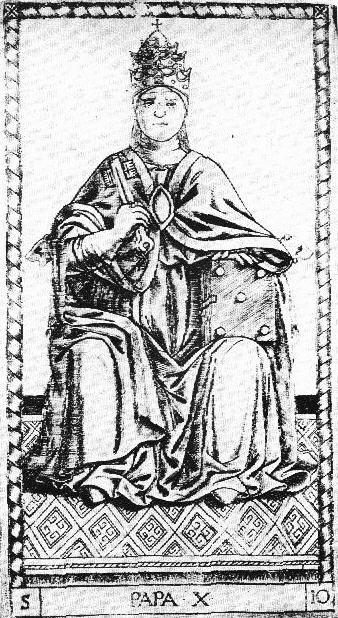
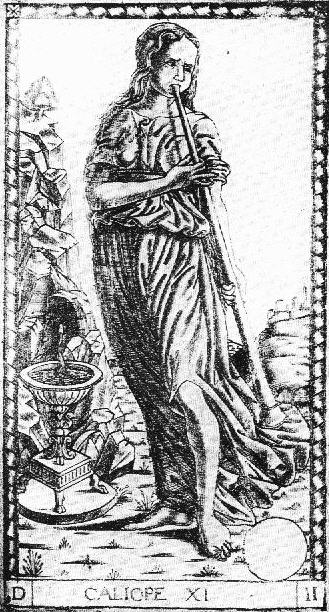
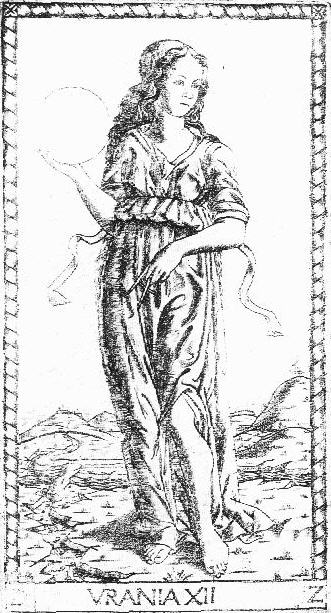
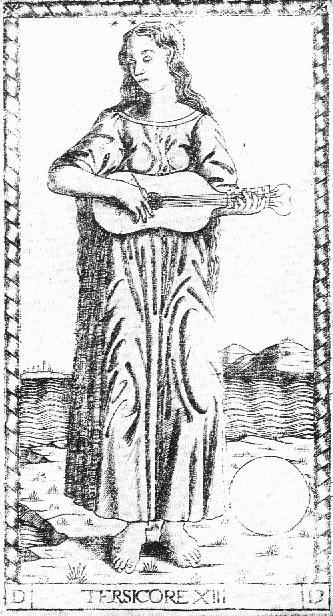
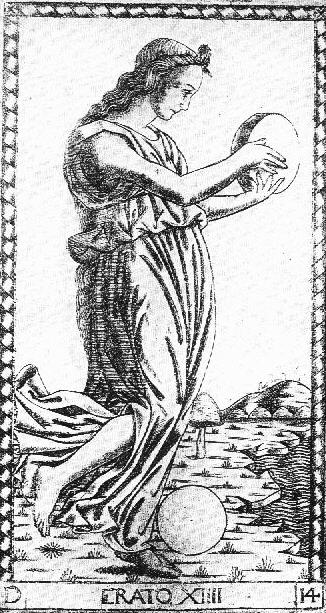
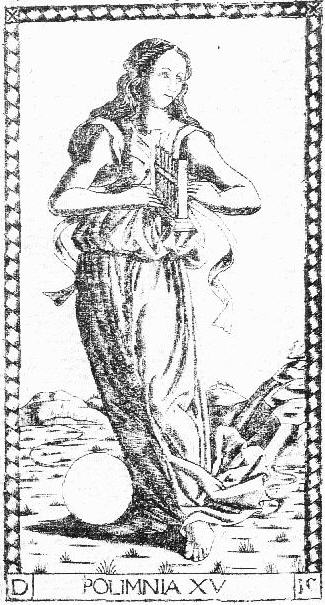
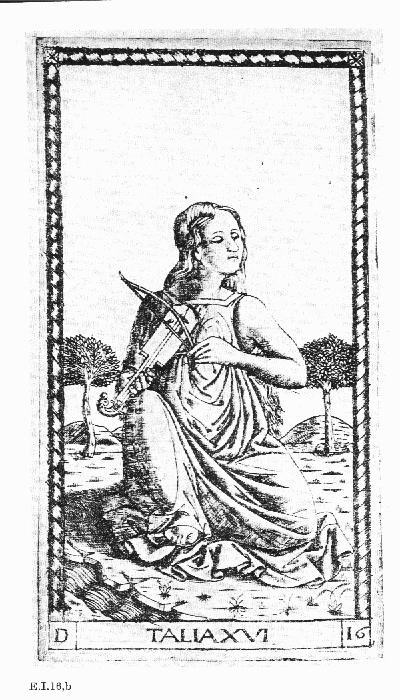
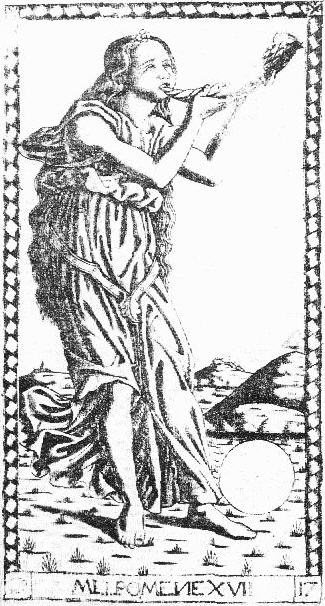
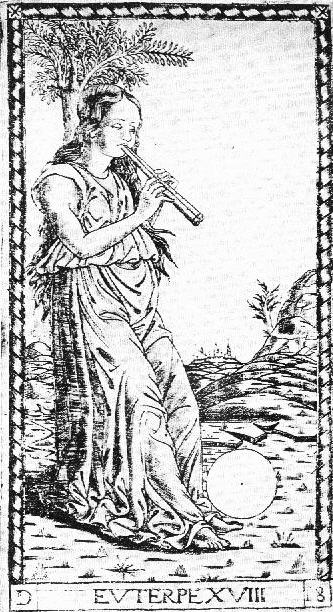
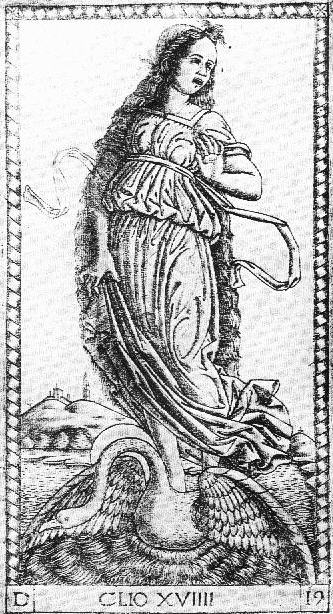
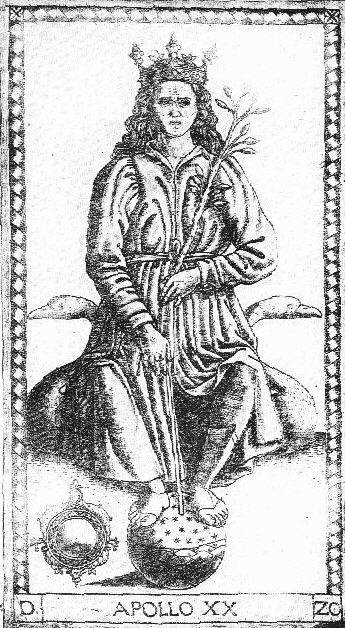
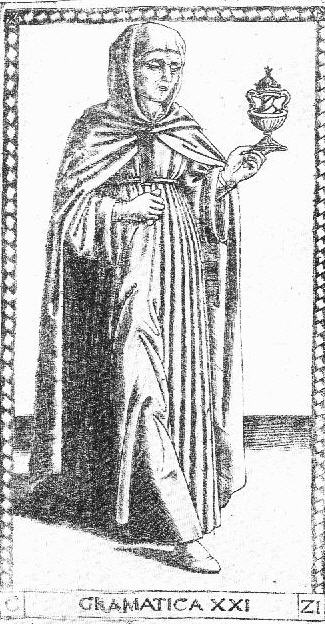
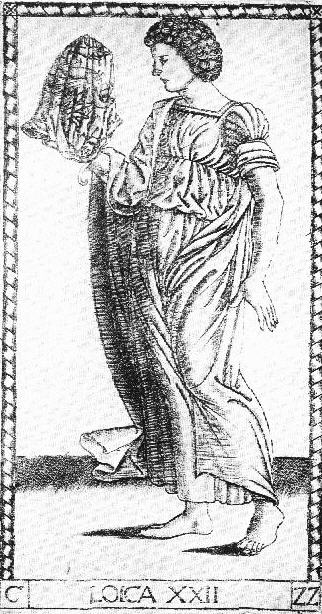
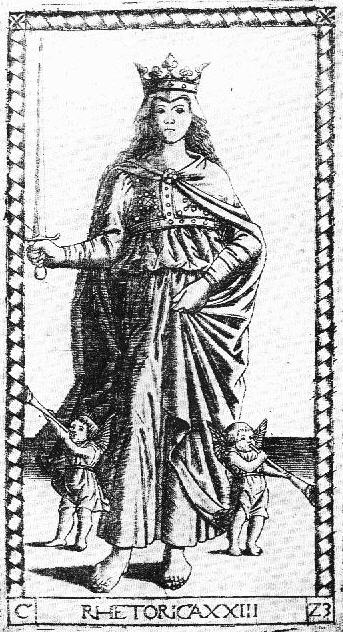
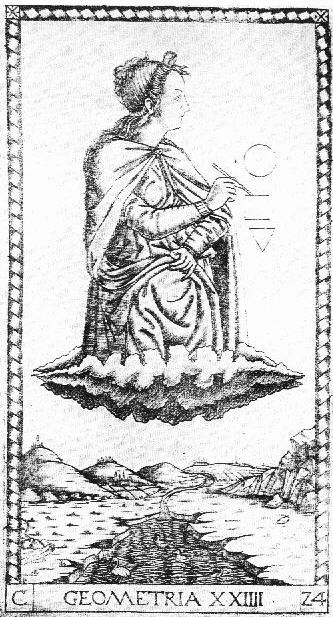
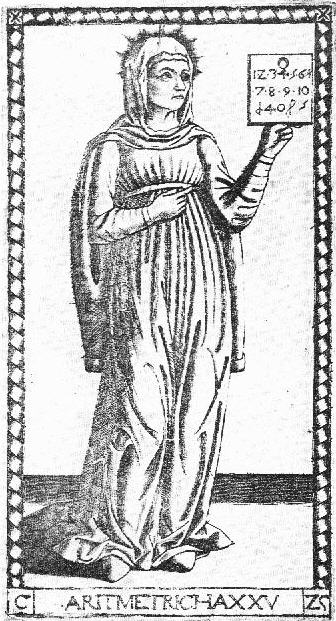
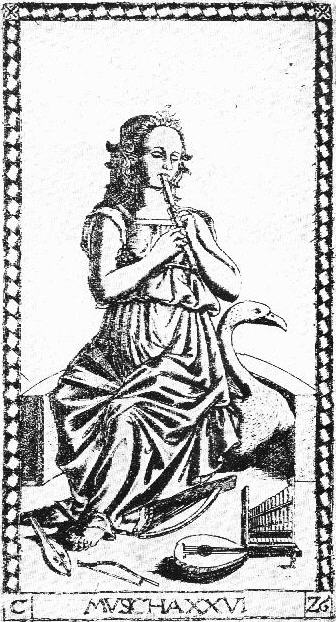
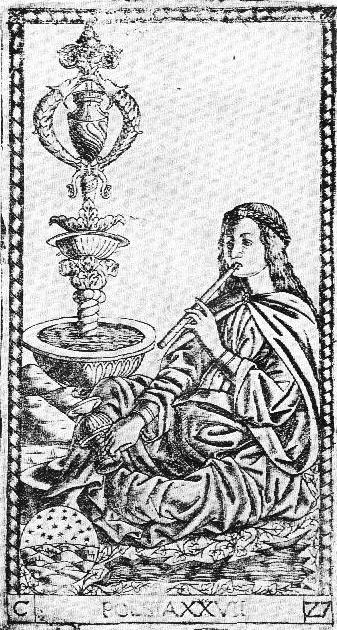
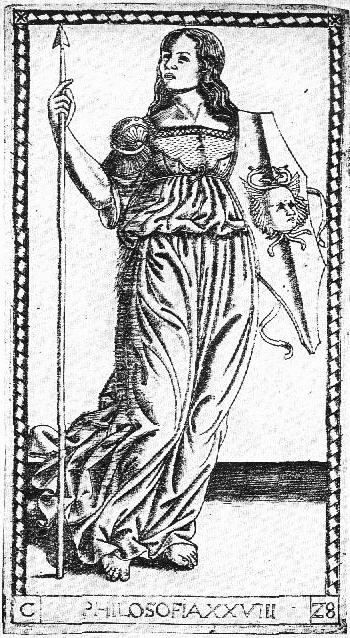
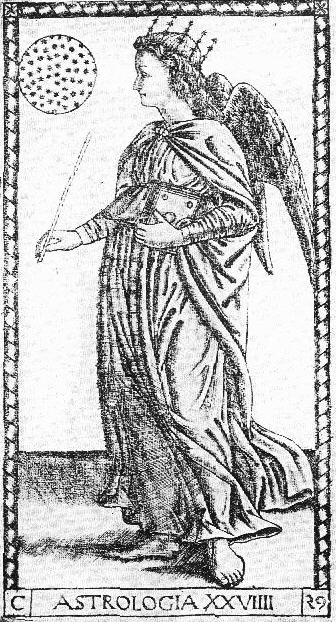
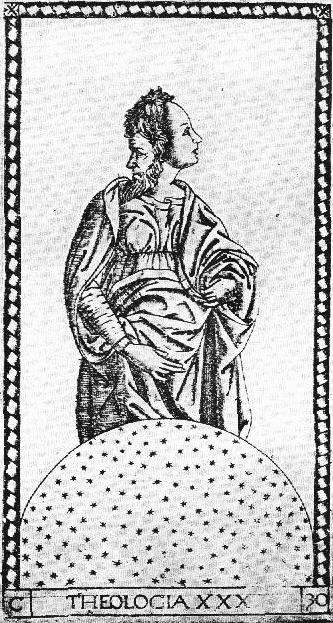
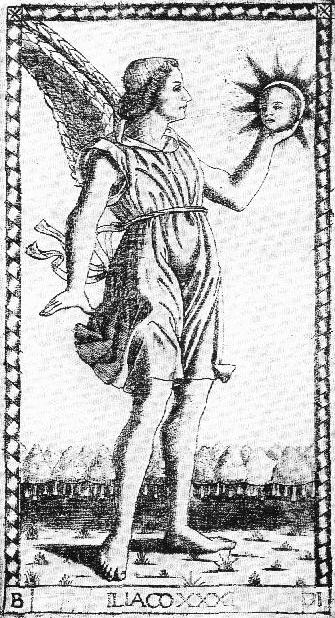
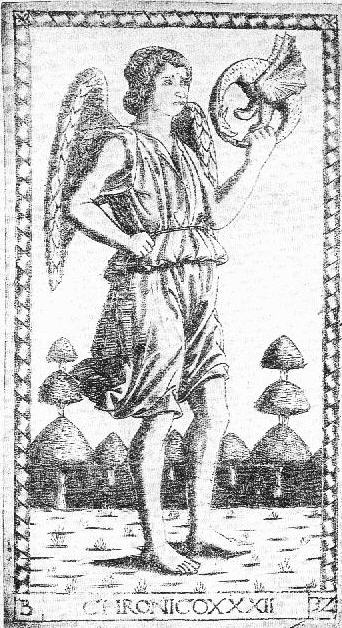
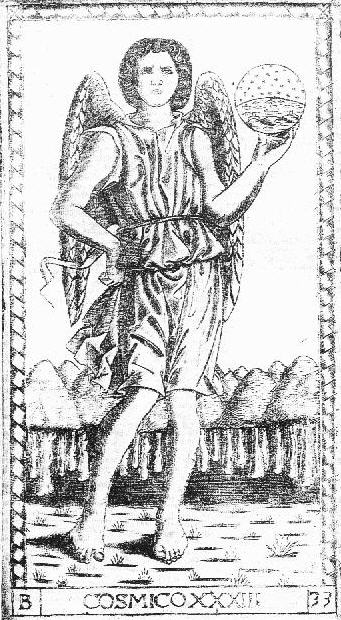
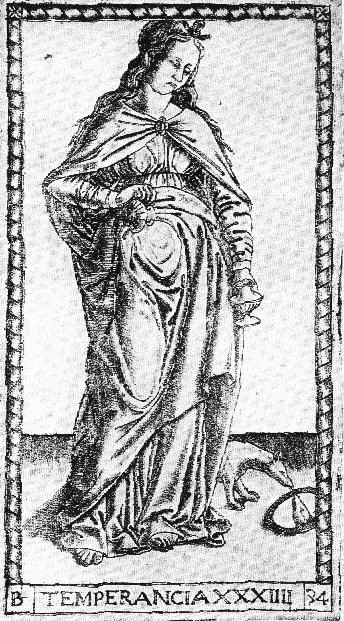
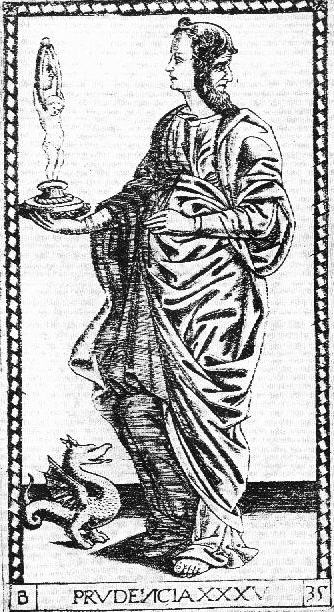
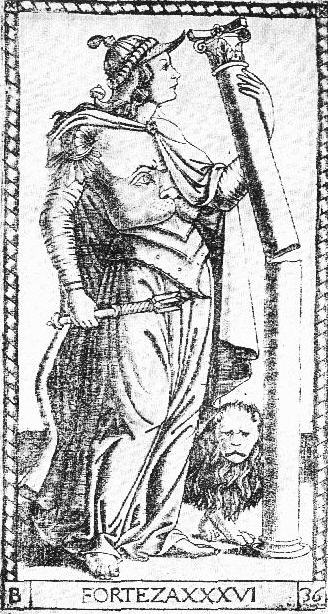
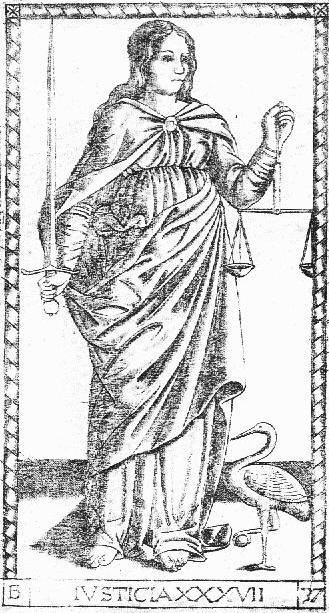
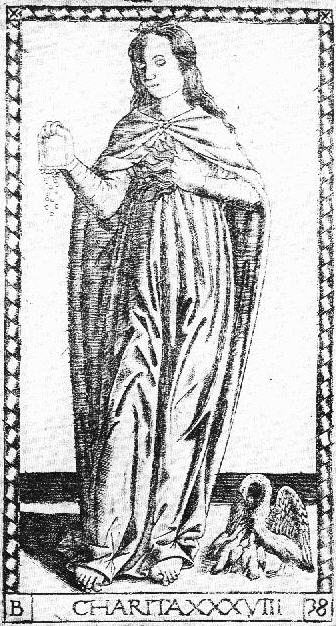
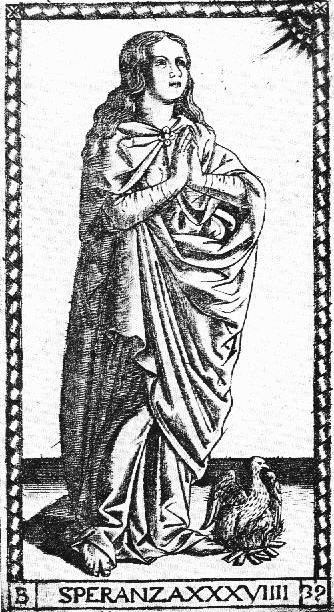
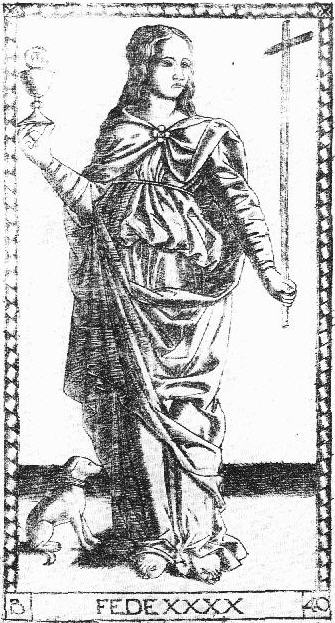
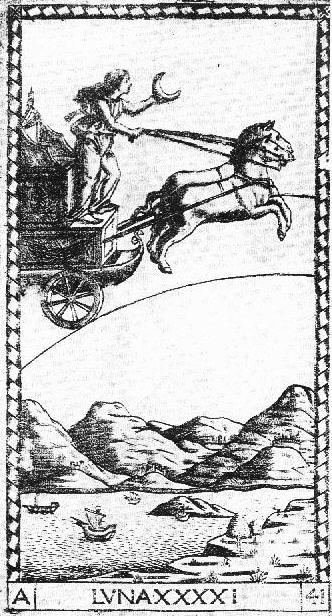
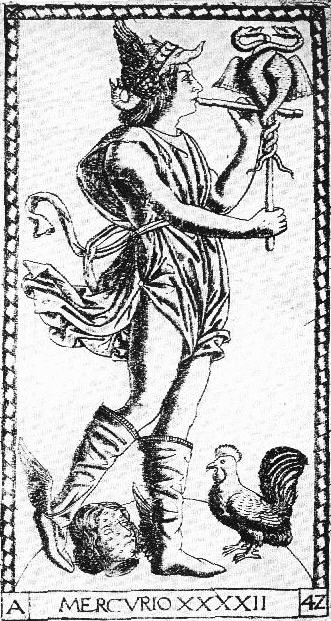
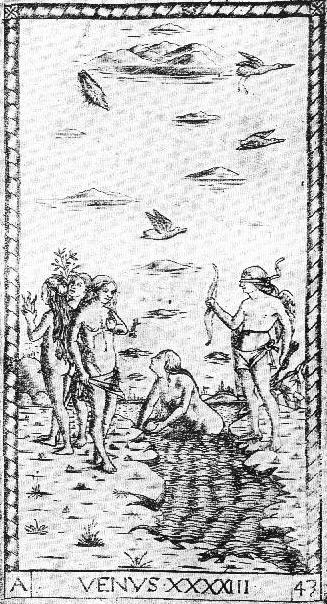
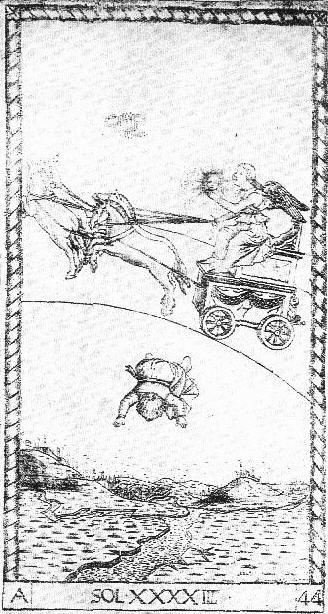
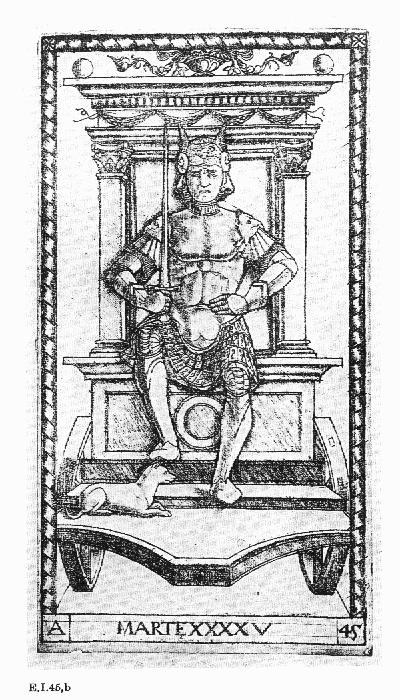
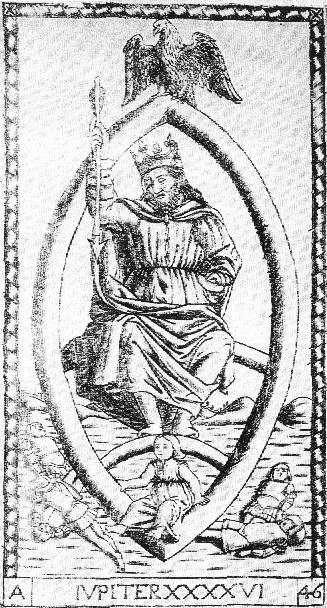
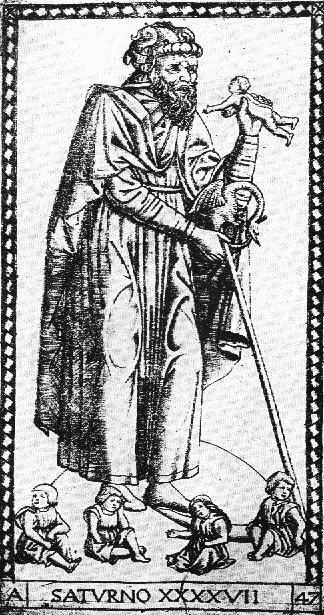
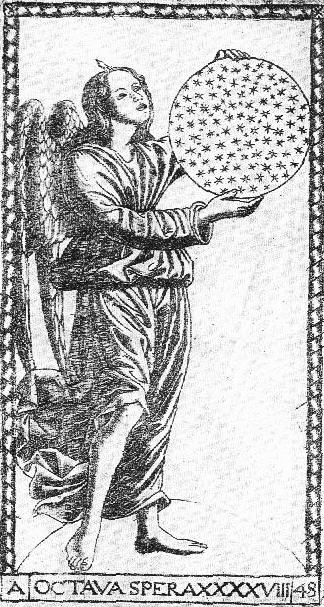
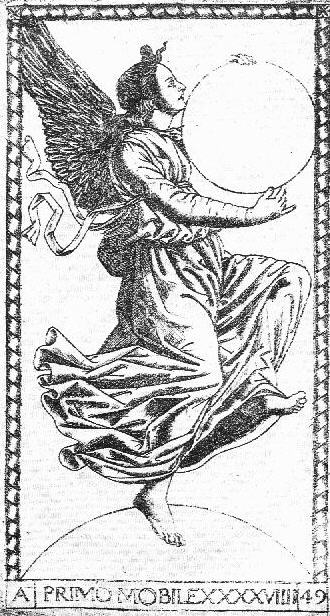
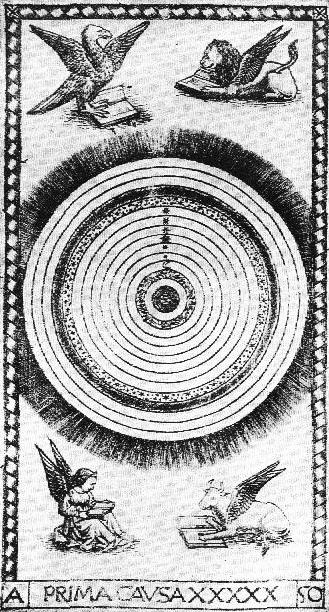
The Mantegna Tarocchi are named after their supposed author, the Italian painter Andrea Mantegna. The Florentine engraver Baccio Baldini was later proposed as the author as well, so his name also appears in some modern names for the set. Today neither artist is believed to have engraved these cards.
There are two different sets of engravings with 50 images each. They date from the 15th century (probably Ferrara, Italy, around 1460) and were probably made by two different artists. Today they are called the E-series and the S-series Tarocchi. The cards were probably an educational aid for upper-class children and were not used for divination or as playing cards. Some of the cards resemble tarot cards in their names and imagery, but most have no connection with traditional tarot decks such as the Tarot de Marseille.
The 50 cards of each series depict an allegorical hierarchy of human society and the cosmos: the conditions of life (from the beggar to the pope), Apollo and the nine Muses, the liberal arts and sciences, the cosmic principles and the virtues, and finally the seven planets and the heavenly spheres. This encyclopaedic quality made the cards an ideal teaching tool for the educated class of the Renaissance.