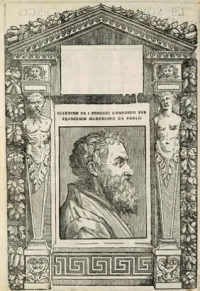
Francesco Marcolini
16th century
Francesco Marcolini was an Italian printer who in 1540 published in Venice Le sorti intitolate giardino d'i pensieri ("The Oracle Called the Garden of Thoughts"), one of the earliest known documents about cartomancy.
The book contains about one hundred images and 2,250 tercets, divided into 50 sections of 45 tercets each, written by the Venetian poet Lodovico Dolce. It is organised as a series of questions and answers about ordinary situations in life: love, health, money, political success, war and so on.
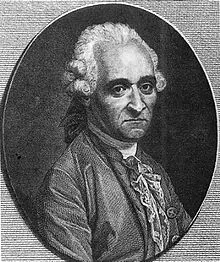
Antoine Court de Gébelin
25 January 1725 – 10 May 1784
Antoine Court was a Protestant pastor in a France that was then mostly Roman Catholic and rather intolerant of other faiths. His father, also named Antoine Court, was a religious leader of the Huguenots, the members of the Protestant Reformed Church of France. He adopted the surname of his grandmother, Gébelin.
He was a Freemason and a member of the lodge Les Neuf Sœurs, to which Benjamin Franklin also belonged, so it is no surprise that he was a strong supporter of American independence. He was a man of many interests. His ideas on the nature of human language were so original for their time that he is now regarded as a pioneer of linguistics. He studied etymology and the history of symbols and mythology, wrote extensively on the history of the calendar, and also wrote on economics and mesmerism.
He did not consider his own civilisation the most advanced in history. Instead, he believed that in the earliest age of humanity there had been a Golden Age, a global civilisation that was enlightened and far more advanced than his own.
In his view the tarot was a repository of ancient knowledge that Egyptian priests had encoded in its images. He owned a Tarot de Marseille, the deck of Nicolas Conver. That deck contains some supposedly Egyptian symbols, such as the winged sphinx on the Wheel of Fortune, although it has been suggested that similar creatures were venerated by ancient cults in southern France around Marseille, which would point to a European origin for these symbols after all. Court de Gébelin, however, claimed that the tarot came from Egypt, was brought to Rome after the Roman conquest of Egypt, and reached Avignon in the 14th century, at the time of the Avignon Papacy, where it entered French occult practice.
In Le Monde primitif, analysé et comparé avec le monde moderne ("The Primeval World, Analysed and Compared with the Modern World"), the series of volumes Court de Gébelin was publishing at the time, an essay by the Comte de Mellet first proposed a mystical connection between the 22 cards of the Major Arcana and the 22 letters of the Hebrew alphabet. Soon afterwards a French writer under the pseudonym Etteilla published a technique for reading tarot cards, and tarot divination as we know it was born.
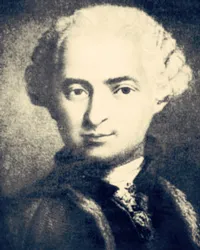
Etteilla (Jean-Baptiste Alliette)
1738–1791
Jean-Baptiste Alliette (Etteilla is a pseudonym formed by reversing his surname) worked as a merchant for a great part of his life, but he was also the first occultist to become publicly known for card divination.
His booklet Etteilla, ou manière de se récréer avec un jeu de cartes ("Etteilla, or a Way to Entertain Oneself with a Pack of Cards"), published in 1770, was the first serious treatment of cartomancy. He described a method using 32 playing cards with the addition of a special "Etteilla" card, laid out in spreads, with distinct meanings for each card depending on whether it fell upright or reversed. In this way he laid the foundation of card divination. He claimed that he had not invented the method himself but had learned it from an Italian he had met. After publishing the book he earned his living as an author and teacher.
In 1781 Court de Gébelin published his essays on the tarot, which linked the cards to divination. Etteilla promptly answered with another book, Manière de se récréer avec le jeu de cartes nommées Tarots ("How to Entertain Oneself with the Pack of Cards Called Tarot"), which appeared in 1785. It was the first book about divination with the tarot. In it Etteilla claimed that he had known this kind of divination since 1751, long before those essays were published.
Etteilla agreed with the Comte de Mellet, who proposed that, besides their Egyptian origin, the tarot cards had a strong connection with the Gypsies, and that the tarot was the Book of Hermes Trismegistus set down in printed images.
Around 1790 he published Cours théorique et pratique du livre de Thot, in which he tried to interpret the Egyptian Book of Thoth. This work set out his vision of what we now call the Major and Minor Arcana and their connection with the four elements and astrology. Towards the end of his life he succeeded in creating his own deck designed for occult use.
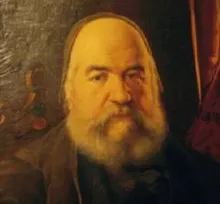
Éliphas Lévi (Alphonse Louis Constant)
8 February 1810 – 31 May 1875
Éliphas Lévi was a French occultist and writer who had a great impact on a number of esoteric and magical orders of the 19th century. He was born in Paris, the only son of a shoemaker, and for a boy of his background the only way to a decent education was to train for the priesthood. He was sent to the seminary of Saint-Nicolas-du-Chardonnet and later to Saint-Sulpice. It was there that he became intrigued by a mysterious vital force then called animal magnetism, which some held to be controlled by the Devil himself. He was determined to learn as much as he could about that force, and he began to study everything he could find on magic and the occult.
In his early twenties he became a follower of an obscure couple who believed they were the reincarnations of Louis XVI and Marie Antoinette. At this time he began writing his first religious books, but he broke with the Church, and his radical political writings, especially around the revolution of 1848, cost him prison sentences. Afterwards, in a rather difficult financial situation, he began to work as a journalist and to give lessons in occult practice under the pseudonym "Magus Éliphas Lévi", a Hebrew rendering of his own name.
In 1854 he travelled to England to give lectures in London, but his poor English hindered him. Nevertheless, he formed a friendship with Edward Bulwer-Lytton, a leading English authority on esoteric and occult matters at the time, who presided over a local Rosicrucian group and asked him to set down his teaching on magic in writing. The result was Dogme et Rituel de la Haute Magie (1854–1856), one of the most influential works of its time, which strongly influenced groups such as the Societas Rosicruciana in Anglia (S.R.I.A.), the Hermetic Order of the Golden Dawn and the Theosophical Society.
The frontispiece of the book carries an image familiar to anyone who has had contact with the occult, an image we can connect with The Devil of the Rider-Waite tarot deck. It is no coincidence that it was A. E. Waite who later translated the book. In Waite's translation, Transcendental Magic, Its Doctrine and Ritual, we find an interesting account of a ceremony in which, after three weeks of fasting and preparation, Lévi performed twelve hours of incantations, after which the floor reportedly began to shake and a ghostly apparition appeared. For Lévi it was a stressful and dangerous encounter. He felt intensely cold, and when the apparition touched his ritual sword, his arm went numb for two days. He later declared that such operations were very harmful to those who took part in them.
His works are full of allusions to the tarot, although he never wrote a book devoted specifically to it. Like his "successor" A. E. Waite, he believed that one source and one doctrine lay behind all the magic found around the world, and he introduced the concept of the "Astral Light" in connection with animal magnetism. In his later years he lived comfortably from his lessons and writings. He died in the year Aleister Crowley was born, and Crowley often claimed to be his reincarnation. Lévi did not support the Egyptian origin of the tarot proposed by Court de Gébelin. He took the Tarot de Marseille as the starting point of the divinatory tarot, connected it with the Kabbalah, and even suggested that the Major Arcana represent the stages of life.
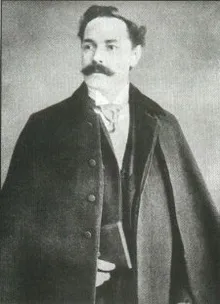
Arthur Edward Waite
2 October 1857 – 19 May 1942
Arthur Edward Waite was one of the most prolific writers on occultism and mysticism of his era. Born in America but raised in England, he is best known for designing the Rider-Waite tarot deck.
After his father, Captain Charles F. Waite, died at sea on 29 September 1858, his mother returned to London to rejoin her family. Arthur had been born out of wedlock, and his mother's family never really accepted them. Instead of the easy life of their wealthy relatives, mother and son led a modest existence on the outskirts of London. During this time his mother converted to the Roman Catholic Church, a faith that influenced his later life and probably explains his inclination towards ceremony.
His mother managed to give him a good education, and in his early twenties, while working as a clerk, he began publishing poems and stories in local literary journals. His interest in the occult and spiritualism grew steadily, and on one of his visits to the British Museum he came across the works of Éliphas Lévi. He decided to devote himself to compiling histories of the various occult doctrines and teachings. Around this time he met S. L. MacGregor Mathers, one of the founders of the Hermetic Order of the Golden Dawn. In January 1891 he was initiated into the Order, although at first he took little part in its activities, probably in part because of his philosophical differences with Mathers.
As the Golden Dawn declined and a split drew near, Waite was introduced to Freemasonry and became a member in 1901. In 1902 he joined the Societas Rosicruciana in Anglia (S.R.I.A.). Members of the Golden Dawn belonged to both organisations, along with other influential people, and there he made useful and productive connections. He was soon received as a Knight Templar at the consecration of the King Edward VII Preceptory. His involvement with Freemasonry faded after 1920, when he turned to other interests and moved out of London.
By 1903 the Golden Dawn had split into several independent groups. One of them, the Independent and Rectified Rite, was led by Waite. He cared far more for mysticism than for magic, many members disapproved, and the order was dissolved in 1914. Waite asked Pamela Colman Smith, an artist and a member of the Isis-Urania Temple of the Golden Dawn, which he led at the time, to illustrate a tarot deck for him. The deck was first published in 1909, accompanied by Waite's short book The Key to the Tarot, and was republished in 1911 with its companion volume, The Pictorial Key to the Tarot, a guide to tarot reading.
Waite died in 1942 and was buried in Bishopsbourne in Kent, where he had spent most of his later years. Today most of his contributions to Western occultism are forgotten. To the end of his life Waite was convinced that all esoteric symbolism and practice share a common root and a single purpose.
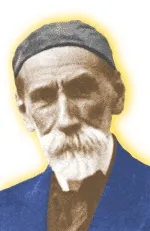
Oswald Wirth
1860–1943
Oswald Wirth was a Swiss artist and author on occult subjects, born in Brienz in the Canton of Bern. In 1889, under the guidance of the French poet Stanislas de Guaita, a founder of the Kabbalistic Order of the Rose-Croix, he created a tarot deck consisting of the 22 cards of the Major Arcana only.
De Guaita proposed that the Major Arcana form an initiatory sequence, a map that initiates use to trace their path of spiritual ascent and evolution. In some respects the deck is very close to the Tarot de Marseille, but it is enriched with additional symbolism. Today it is usually called the Wirth or Wirth-de Guaita deck, although it was originally known as Arcanes du Tarot kabbalistique.
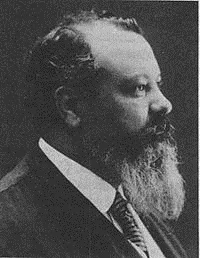
Papus (Gérard Encausse)
13 July 1865 – 25 October 1916
Gérard Anaclet Vincent Encausse, known as Papus, was born in A Coruña, Spain, but raised in Paris, and became one of the most notable occultists of his time. As a young man he began to study the writings of Éliphas Lévi and developed an interest in the occult, the Kabbalah and magic. Over the years he belonged to many esoteric societies: the Hermetic Brotherhood of Light, the Paris temple of the Hermetic Order of the Golden Dawn, the Rite of Memphis-Misraïm and the Theosophical Society. He also co-founded his own group, the Kabbalistic Order of the Rose-Croix, and became a bishop of l'Église Gnostique de France, an attempt to revive the Cathar religion. In 1891 he founded l'Ordre des Supérieurs Inconnus, the Martinist Order, which remains his most enduring legacy.
At the beginning of the 20th century he served Tsar Nicholas II and Tsarina Alexandra as both physician and occult adviser. According to legend, he summoned the spirit of Alexander III, the Tsar's father, who foretold that Nicholas would be killed by revolutionaries. Papus is said to have replied that he could protect the Tsar by magical means for as long as he himself was alive. Less than a year after Papus died in 1916, Nicholas II was forced to abdicate, and he and his family were later executed.
Apart from his occult interests, he was highly educated in the conventional sense of the word. After earning his doctorate in medicine with a thesis on philosophical anatomy, he opened his own clinic in Paris. He was a skilled physician, hence his pseudonym Papus, a name said to mean "physician". He died of tuberculosis in 1916 in a military hospital in France.
His work was very influential at the turn of the century, and his books and ideas left their mark on the tarot as we know it today. His book The Tarot of the Bohemians, together with Waite's The Pictorial Key to the Tarot, is one of the cornerstone works on the subject from the late 19th and early 20th centuries.
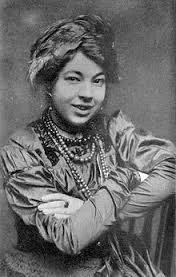
Pamela Colman Smith
16 February 1878 – 18 September 1951
Pamela Colman Smith is the artist who illustrated the Rider-Waite tarot deck for A. E. Waite. Born in London, she studied art at the Pratt Institute in Brooklyn but never took a degree. She returned to England in 1899 and, soon after joining the Hermetic Order of the Golden Dawn in the early 1900s, was introduced to Waite.
Waite is often cited as the sole creator of the Rider-Waite tarot, but in truth Pamela Colman Smith had a great impact on the design of the cards, especially the Minor Arcana, where she sometimes followed Waite's instructions only loosely. The original drawings are lost.
She never married, and in the later part of her life her art never achieved significant success. She died poor in England in 1951, and most of her work was sold after her death to cover her debts.
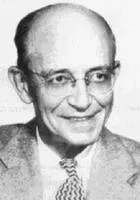
Paul Foster Case
3 October 1884 – 2 March 1954
Paul Foster Case was an American writer and occultist, best known as the founder of the mystery school Builders of the Adytum (B.O.T.A.) and as the creator of the B.O.T.A. tarot deck, a slightly altered and, in Case's opinion, improved version of the Rider-Waite cards.
His father was the town librarian and a deacon of the local Congregational church. In his early life Case was a talented musician. Around 1900 he developed an interest in the occult and the tarot. After some years of independent spiritual searching and the practice of yoga, he reportedly had a meeting in Chicago at which a prominent Chicago physician approached him and told him that he could choose between a highly successful career in music and a mission to help humanity. The message was said to come from a mysterious figure called a "Master of Wisdom". Case later described this event as the turning point of his life. In 1915 he began to publish a remarkable series of articles on the tarot keys, The Secret Doctrine of the Tarot.
Meanwhile, after the breakup of the Hermetic Order of the Golden Dawn in 1903, its co-founder S. L. MacGregor Mathers had set up the Alpha et Omega, which included the Thoth-Hermes Lodge. In 1918 Case met a member of that lodge, Michael James Whitty, with whom he formed a long-lasting friendship. Soon afterwards Case joined the order and began to rise through its grades. His motto in the order was Perseverantia (Perseverance). Over time his relationship with the order and its members became quite turbulent. An important part of the order's work was the practice of Enochian magic, which Case found very dangerous and capable of leading to evil possession and physical illness; he believed that his friend Whitty had died because of it. Case also considered rightly directed sexuality an important part of human spirituality, a concept rather foreign to some members. After he began an intimate relationship with a member of the order, he left the Alpha et Omega and promptly began to plan his own mystery school.
In 1923 Case finally ended his musical career and founded the School of Ageless Wisdom, later renamed the Builders of the Adytum. He had already written a large number of lessons for its members, and these treatises were probably the high point of his work as a writer. They covered most of the occult field: the tarot, alchemy, the Qabalah and Hermeticism. Case envisioned B.O.T.A. as the direct successor of the Golden Dawn, purged of everything connected with Enochian magic as derived from the work of the English occultists John Dee and Edward Kelley, whose teachings and ceremonies he considered dubious and dangerous.
The founding of B.O.T.A. reportedly had its own share of mystery. For years Case had heard an inner voice that guided his writing and his study of the occult. Just before the founding of the order, so the story goes, he received a telephone call from the same voice. He later met the man, whom he called the Master Rákóczy, and received personal instruction from him for three consecutive weeks, after which the Builders of the Adytum was formed. Case and Whitty also published The Book of Tokens, a channelled text later attributed to the same mysterious Master Rákóczy.